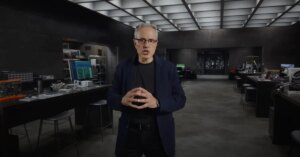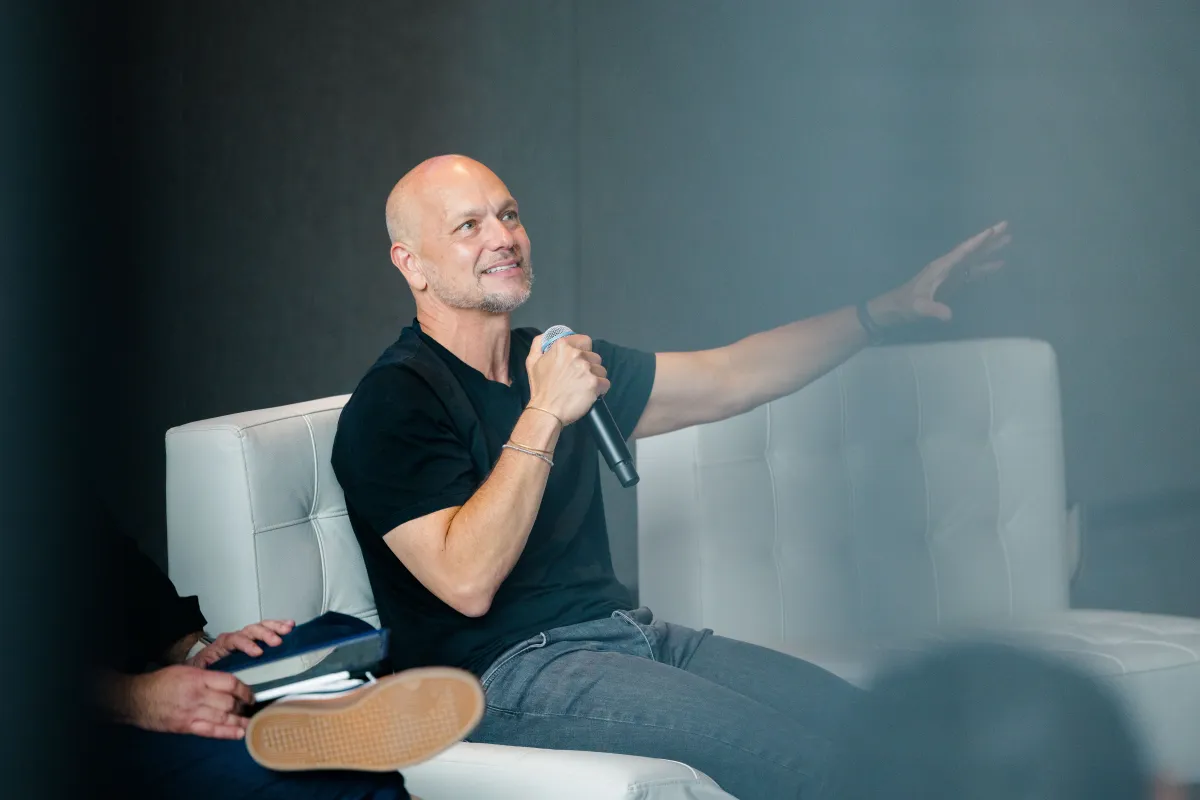
When Tony Fadell takes the stage of the launch Future MIT FestHe created a slide with three pictures of the now-defunct AI device: the Rabbit R1, the Humane Ai pin and the infinity pendant.
“These are kind of ‘Gen 1’ AI products, and because of my background, these companies called me and asked me to help them,” Fadell said. “I didn’t.”
It’s no surprise that these companies want Fadell’s advice. He is credited as the “father of the iPod”, the co-creator of the iPhone, and the founder of Nest, the smart thermostat company that was bought by Google.
“You have to really understand what you’re trying to do, the pain you’re trying to solve,” he said. “In each of these cases, each one doesn’t meet any need – it’s just interesting technology for geeks, and you’re like, ‘Oh, it’s great, but it doesn’t really apply to my life.’
These early AI devices promised the convenience of having a personal assistant, but didn’t do a good job. Even if they do, most people have never had an assistant and know how they will use – or grow to trust – a personal robot assistant.
“It’s less than 0.01% of the world’s population that has ever had a human (assistant) do anything, and so when (a company) says, ‘Oh, we need an assistant,’ that’s the group of people who have an assistant talking. “Most consumers don’t know what an assistant is.”
Fadell went on to explain to us that 99.99% of the time hiring a reliable personal assistant is not as straightforward as pulling the most outstanding resume off of an application.
“It took the first few years that I understood the best way to use (assistants), and then trust them with the most sensitive information, and let them represent where they set up meetings with people and work with my bank,” he said. “I understand that we have a vision of the future, but there are many steps to get the general consumer and even the general business on this path.”
It’s hard to talk about the struggle of building trust in your personal assistant without sounding a little off, but Fadell has a point. When you hire a human assistant, you don’t have them log into your bank account one day. We’re heading toward a world where anyone can have a personal AI assistant, but these tools are only valuable if we trust them to be completely safe.
At this point, building trust with AI assistants seems more difficult than relying on humans. Meta recently launched Muse, an all-purpose AI assistant, but users have reason to be cautious. Security researchers quickly found something serious Weakness In Muse after the launch, and recently 404 media reports Stated that some Meta employees discovered security issues that caused several teams to start a “mad dash” to fix these issues before launch, working overtime.
“Trust and security are so important that we turn to some kind of intelligence,” Fadell said. “The only company that I can see right now – maybe one more – is Apple that can do it. Apple has all the hardware, they have all the chips, they have all the parts, but they don’t have all the AI equipment.”
Although it’s not Apple that produces the most addictive AI agents, Fadell predicts that successful agents will have to operate only on devices, both for privacy and to keep the technology lightweight.
“When you hear all this stuff, ‘Oh, the data center is going to conquer the world,’ … I don’t believe it. “I’ve seen this before. I’ve seen this kind of play in the internet days and what have you. We have more power in devices now, and even more computers, and they still use batteries.”
By keeping sensitive information on the device, rather than sending it through the cloud, Apple has gained the trust of users to share their biometric information through features like Face ID. As Fadell noted, Apple seems to be more willing to consumers than its competitors when it comes to privacy, but unlike other leading technology companies, Apple does not have its own world-class AI model – the new Siri AI works on a custom-built version of Google’s Gemini.
While Apple is lagging behind in proprietary AI, it’s moving forward in hardware. Fadell theorizes that companies like Meta and OpenAI are turning their attention to devices because they don’t have billions of devices circulating like Apple.
“It’s because they don’t have access to the sensors on your phone. They’re like, ‘Oh, we’re going to need video,’ and you have to check, ‘Yeah, I’ll give you video.’ Then they said, ‘Well, we need a voice.’ check. ‘We need your GPS location.’ check. And before you know it, it becomes a list of 20 or more things you’ve allowed them to have,” he said. “So what do they do? They go build a device with all the stuff in there without a screen… and then they just Bluetooth or Wi-Fi into your phone and then back it up to the web, or into the 5G network, so they can get all the sensor data.”
Given the history of creating the iPhone and iPod, it might seem that Fadell is still looking at his former boss through rose-colored glasses. While he may give Apple credit where it’s due, he’s not shy Call Apple out When he thought they were busy.
When audience members asked about the luck involved in finding the right product for the market, Fadell pointed out that it’s harder for startups to generate luck, because a failed product can spell the end of a company.
“Because it’s a start, you get one shot,” he said. “It’s not like Apple with Vision Pro.”
When you purchase through a link in our article, we may receive a small fee. This does not affect the independence of our editors.