When you think of Amazon hardware, premium design and high performance probably aren’t the first things that come to mind.
Kindles and Fire tablets have generally prioritized affordability above all else—and while that formula has worked, it hasn’t produced the most exciting technology.
That seems to be changing with Amazon’s latest hardware. The new Kindles and rebranded Alexa tablets are slimmer, smarter, and significantly more powerful than their predecessors—and while they come with higher price tags, I’m surprisingly okay with that.
The Alexa Tablet 12 Pro is the first Amazon tablet I’ve actually wanted to use
Amazon has been making Fire HD tablets for years, and they’re good for those who need a cheap tablet for watching videos and entertaining the kids — but let’s be honest, they’ve never been that good for anything else.

The meager processor and hardware combination meant they never really got any gaming performance beyond basic games like Candy Crush, and then there were the apps. Despite running on a custom version of Android, Amazon has included its own Appstore instead of the much more popular Google Play. It had some popular apps, but there were a lot that it didn’t. Of course, you can also sideload apps, but Amazon has been trying to crack down on that lately.
So when Amazon announced the rebranded Alexa Tablet collection earlier this week, I was pleasantly surprised by what I saw.
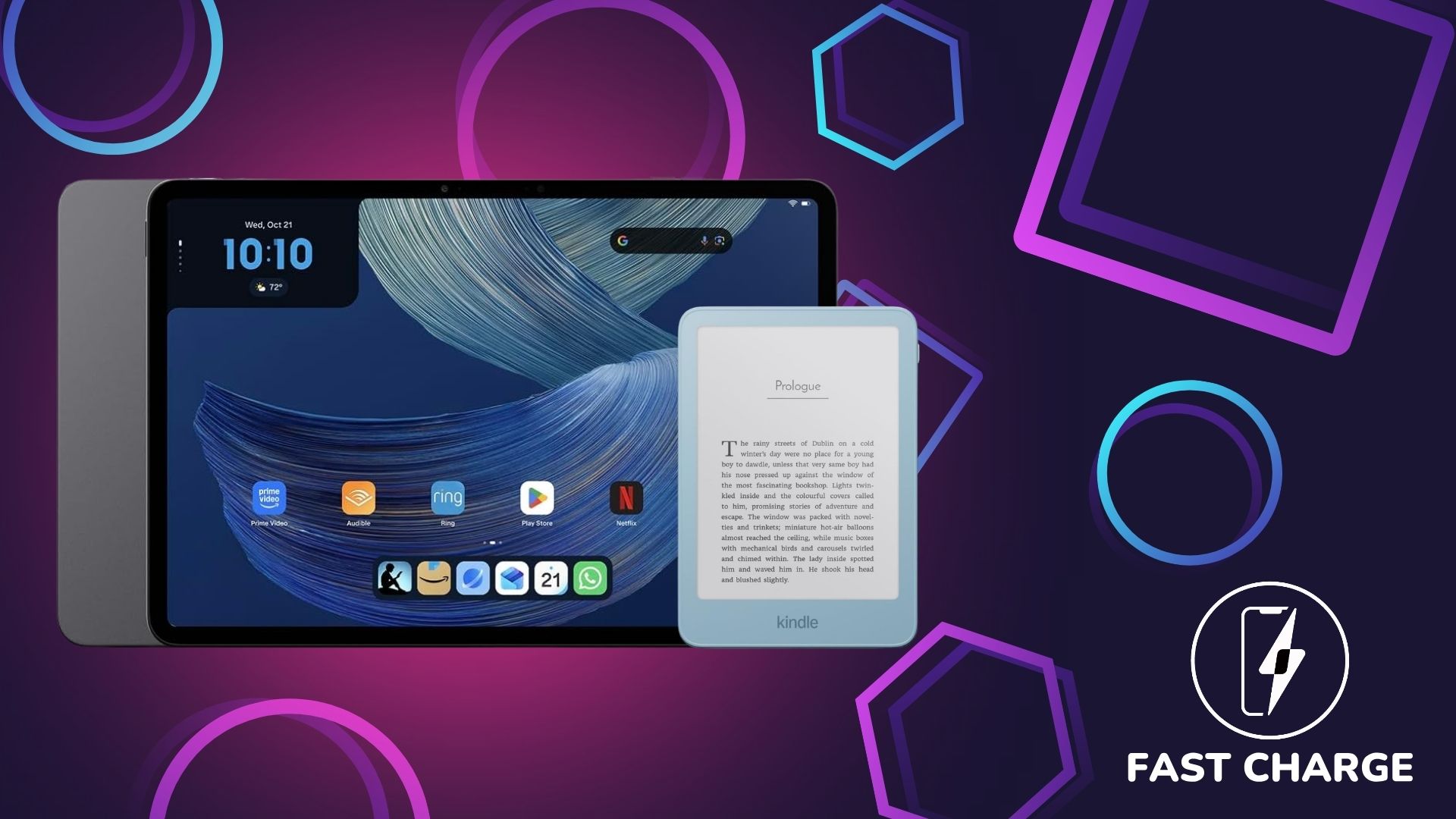
The headliner is of course the new Alexa Tablet 12 Pro; It features a 12-inch 120Hz screen with an optional nano-matte anti-glare screen that does a great job of reducing glare – similar to Apple’s high-end iPhone Duo. Amazon has taken this further by incorporating a special reading mode that activates when the Kindle app is accessed, making it a pretty competent large-screen e-reader replacement.

It’s a night-and-day upgrade over the outgoing Fire HD tablets in the performance department as well, with a MediaTek Dimensity 8400 chipset that’s more than enough to handle even challenging mobile games.
Crucially, it comes with proper, full-featured Android and Google Play access, with no restrictions on what can be downloaded onto the tablet. That alone is a game changer for Amazon’s tablets; the other updates are just the icing on the now very tempting cake.

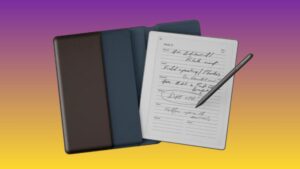
It transforms Amazon’s tablets from something suitable for casual movie-watching to something that rivals Apple’s entry-level iPad — especially when you pair it with the optional stylus and POGO-connected keyboard for increased productivity. I never thought I’d say that about a tablet made by Amazon.
Now it’s the all-singing, all-dancing top model, but the Alexa Tablet 11 and Tablet 8 also offer more affordable options. While these premium features like the 120Hz refresh rate, dimensional performance, and matte finish still make for a much better full Android experience than what came before. A total win indeed.
The aluminum-clad Kindle scratches an itch I didn’t know existed
I’ve been a fan of Kindles for years; I think they just make sense.
They are relatively inexpensive, have thousands of books, and combined with my Kindle Unlimited subscription, I can read a library of millions of titles. Yes, I could have gone the Kobo route, or recently some Boox, but for me, nothing beats the selection of books and convenience that a Kindle offers.

That said, I’m very much a Kindle swamp type; you won’t see high-end models like Colorsoft. My current Kindle is the entry-level model – with ads – from 2022, and it still suits my needs perfectly.
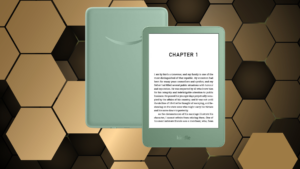
So I was surprised when I saw the updated Kindle and felt like a yearningnot for the entry-level 2026 model, but for the more premium model. Why? I can’t say for sure, but I think it has a lot to do with the aluminum housing.
My main problem with my current Kindle is that it’s showing its age – badly. The cheap plastic case is marred by scratches and nicks, with a crack in one corner and a piece of plastic chipped on the left side of the screen. I actually get excited while reading it, which probably it doesn’t help, but you know. It’s there, so I’m going to wiggle. It got to the point where I ended up covering the back of my Kindle with stickers just to help hold it together.

But an aluminum frame? Most of my problems wouldn’t be there now. Yes, it would still be worn and probably scratched if I just threw my Kindle in my bag, but it wouldn’t fall apart like my plastic-framed Kindle does now.
And let’s be honest, the cool touch of aluminum feels miles better than the warm touch of plastic. Does it actually change the reading experience? No, but definitely to feel it’s more comfortable to hold for longer – especially in combination with the slimmer dimensions and the beautiful green and blue color scheme.

I think this also has a lot to do with the new magnetic housing; not only does it protect your Kindle, it also adds a physical page turner button. Yes, it’s a simple addition, but as someone who loved the past experience of Kindles covered in physical buttons, I want it. Poorly. And I can’t even remember the last time I thought that about a Kindle.
A little Panay magic?
The big question is what triggered these massive hardware upgrades? Amazon has been releasing budget-friendly Kindles and Fire HD tablets for years, and they’ve mostly followed the exact same formula.
Of course, there are a lot of factors that go into decisions like this, but I can’t help but think that ex-Microsoft boss Panos Panay played a big role in the transformation we’re seeing right now.
It was Panay the guy at Microsoft; the former product director not only presented himself at Microsoft’s announcements in a very, shall we say, unique style, but he led Windows 11 and the entire Microsoft Surface line was born. That’s quite a pedigree, and Amazon likely hired him in 2023 to replace then-departing hardware boss Dave Limp.

At Amazon, Panos now looks after most of Amazon’s hardware, including, yes, you guessed it, Alexa tablets, Kindle and Ring hardware, in addition to Blink, Fire TV, Echo and Alexa.
You could argue that we’ve already seen its impact since it’s been there for nearly four years, but as with all tech releases, these things time to develop. In my opinion, this shortcoming sounds about right, and the higher-end aesthetic is definitely in line with the ethos of the Microsoft Surface it leads.
It’s the end of Amazon’s really cheap tech — but its hands were probably tied
The caveat with the introduction of higher-end hardware is that prices have risen quite significantly in some places. The aluminum-clad Kindle, for example, costs £169/$189, while the plastic-backed 2024 alternative costs just £94/$109.
But of course, the biggest hit is Amazon’s budget tablet line; with the Alexa tablets, the older, more budget-friendly Fire HD tablets were included in the box.

I still think that what Amazon has to offer with the newer Alexa tablets are better than the Fire alternatives in every way, but they’re also undeniably more expensive. The top-of-the-range Tablet 12 Pro with a matte finish costs £499/$549, which is more than Apple’s entry-level (and very popular) iPad.
Amazon has been working on these products for quite some time, but I wonder how much the rising cost of components like RAM and storage has affected it. Yes, the previous Fire HD tablets weren’t packed with RAM and storage, tablets usually came with 3GB of RAM and 32GB of storage, but at £99/$99 (at least for the HD 8) I don’t think they could handle the increase in component prices.
At least with newer tablets, Amazon can to justify increasing the price of components and therefore its own products, more than it could with basic, entry-level Fire HD tablets.
So yes, this looks like the beginning of the end for Amazon’s really cheap smart tech, but if it means better, more efficient, and genuinely interesting products, I wholeheartedly welcome the change.