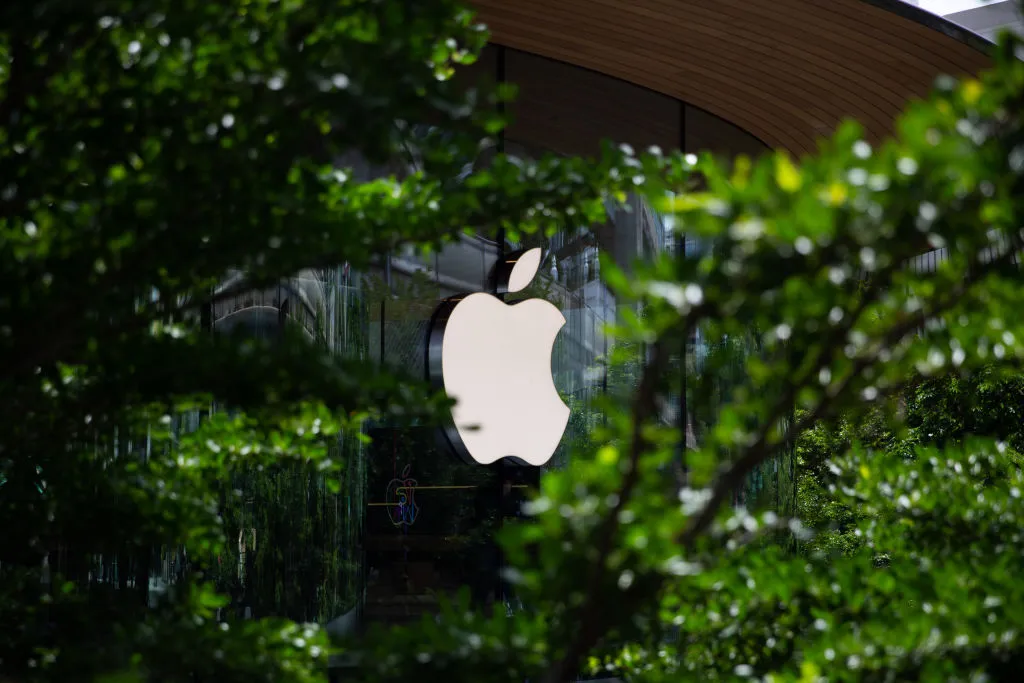
While Silicon Valley is spending billions to get AI agents to shop for us, the man who pioneered Apple’s retail store thinks the industry is overestimating how much shoppers will hand over to machines — and believes physical stores will continue to thrive.
Ron Johnson, 66, has heard predictions about the demise of physical retail before. He joined Apple in 2000 to build its retail business as online shopping was taking off, and went on to help build a network of stores that became central to how Apple sells its products and connects with customers.
“AI is a new technology that will improve the online shopping experience,” Johnson said in an interview, “but I don’t know if it will change the way we shop.”
Johnson’s view comes as some of the world’s biggest tech companies are trying to push AI deeper into shopping, betting that agents can automate the way we search for and buy products — a concept known as agent commerce. Google is building on that push with the Universal Commerce Protocol, a standard designed to help AI agents take consumers from product discovery to payment. Meanwhile, OpenAI is turning ChatGPT into a shopping site where users can research, compare, and, in some cases, even buy products without leaving the chatbot.
When asked if he could imagine someone letting an agent choose and buy a $1,000 or $2,000 laptop without ever visiting the website or the store, Johnson said bluntly: “Honestly, no one would do that.”
Buying a laptop, he argued, is too personal a purchase to simply hand over to an AI agent. Buyers want to feel its weight, look at the display and decide which size suits them. AI may narrow the options, Johnson told TechCrunch. He added that many consumers still want to experience the product themselves before spending that kind of money.
“AI won’t let you experience the product,” Johnson said. Instead, he expects agents to better inform consumers before they walk into the store. “They will become more informed shoppers when they come to the store.”
Johnson’s conviction stems from a decision Apple made more than two decades ago. Apple’s physical stores, he said, are designed not only as places to buy Macs, but also as places where people can try out products, learn how to use them, and go back for help when something goes wrong.
Some of those bets are revisited A Different Store: How Retail Reveals Apple’s WonderJohnson’s new book about building Apple’s retail operations alongside Steve Jobs. Competitors, he said, borrowed Apple’s heavy glass design, open layout, and even a version of the Genius Bar, but often missed people.
“The secret sauce for Apple is its people, the people in the stores, and the way it treats customers,” Johnson said.
Apple Store employees are not paid, Johnson said, unlike the general sales culture across retail stores. The idea, he said, is to take the pressure off selling and instead let employees find out what customers want.
After leaving Apple, Johnson took over JC Penney in 2011 with an ambitious plan to revive the struggling department store chain. he Drive out Less than two years later after sales have declined.
Now Johnson says he’s trying to change too much, too fast, without bringing employees and customers on board. Apple’s stores have effectively been a starting point that has evolved alongside the company’s products. On the other hand, JC Penney is a transformation that requires a different approach.
“I applied startup thinking to what was needed to transform,” he recalls.
Johnson later returned to the startup world, founding Enjoy Technology, an e-commerce company that brings technology products and installation services directly to customers’ homes. The beginning Filed for bankruptcy in 2022 and sold all his possessions in abundance to Asurion.
For all his skepticism about how AI will change shopping patterns, Johnson remains confident in the technology itself. “I’m a true believer in AI. I’m an AI optimist,” he said.
He believes Jobs may also embrace AI, but not as a substitute for human judgment. “There is no substitute for human intelligence,” Johnson said, recalling Jobs’ belief in bringing smart people together to debate problems and find new ways of looking at them.
When you purchase through a link in our article, we may receive a small fee. This does not affect the independence of our editors.